How to Clean a Toilet Brush and Keep It Clean
The short answer
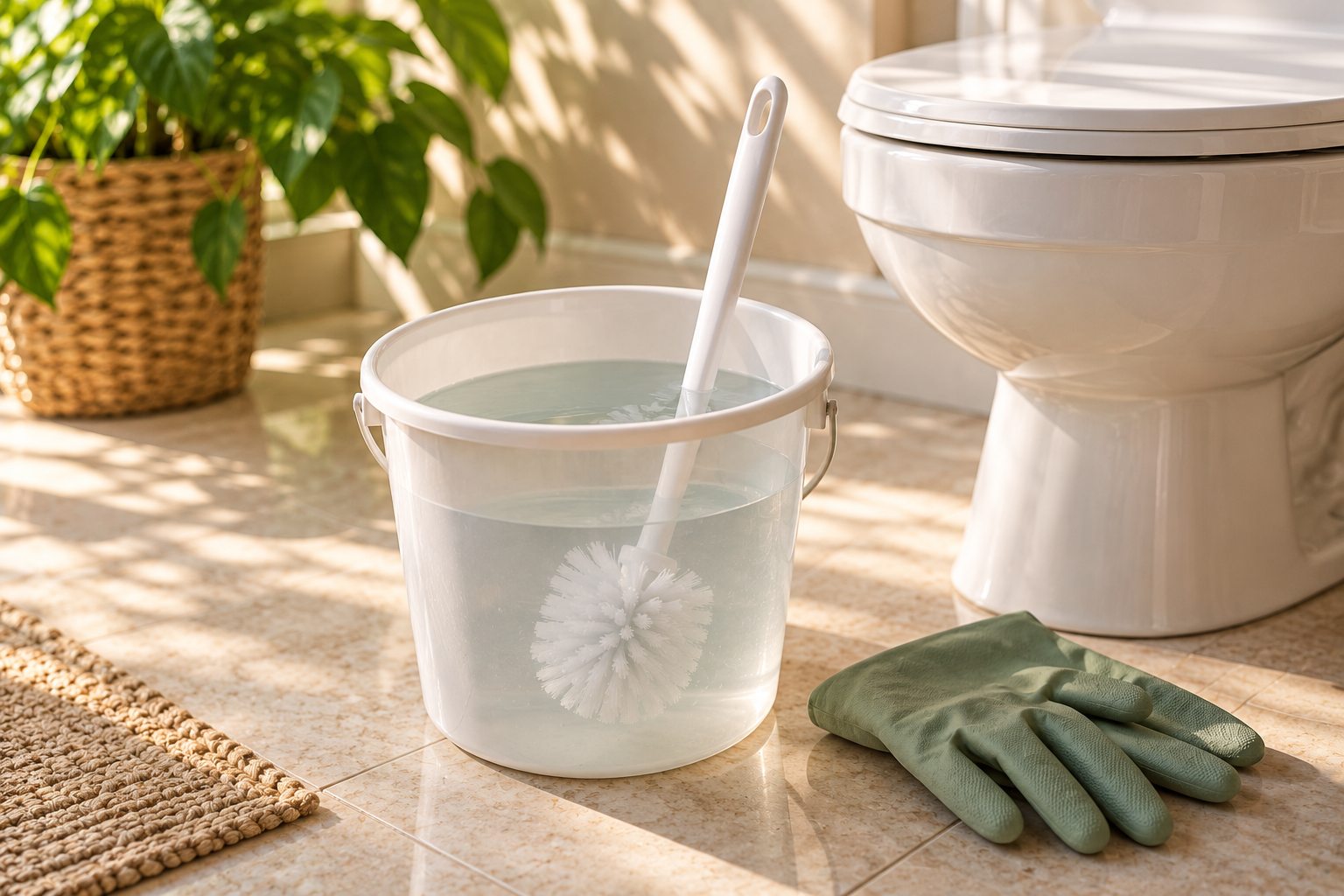
After each use, rinse the brush in clean flush water, disinfect it, and let it dry before it goes back in the holder. About once a week, soak it in a bleach solution and wash the holder too. Flush away any bowl cleaner first, because bleach must never mix with it.
You're ahead of most people just by reading this. In an informal Twitter poll by Consumer Reports, around 77 percent of respondents said they never clean their toilet brush.
Read this first: never let bleach meet toilet bowl cleaner. The Washington State Department of Health warns that bleach gives off chlorine gas when mixed with an acid, and lists toilet bowl cleaners and vinegar among products containing acids. Mixed with ammonia, bleach produces toxic chloramine gases.
If you mix them by accident, leave the room and get fresh air. For symptoms, call Poison Help at 1-800-222-1222, or 911 in an emergency.
What you'll need
- Household gloves
- A disinfectant spray and wipes for quick cleans
- Household bleach and a bucket for deep cleans
- A window or fan for ventilation
The quick clean, after each use
This is how to keep a toilet brush clean between deep cleans. It takes a minute or so, plus drying time.
- Rinse it in clean water. Flush, then swish the brush in the fresh water until nothing is clinging to it.
- Disinfect it. Consumer Reports suggests a disinfectant spray on the brush and a disinfectant wipe on the handle. Follow the label, including how long the product needs to stay wet.
- Rinse it again. Use hot water, as Consumer Reports suggests.
- Let it dry over the bowl. A common trick is to sandwich the handle under the toilet seat so the head hangs over the bowl and drips. Put it back only once it's dry.
The deep clean, about once a week
Do this with the window open or the fan on, and wear gloves.
- Get rid of any bowl cleaner. Flush, swish the brush in the clean water, then flush again. If there's cleaner left in the bowl or on the bristles, wait until you've rinsed it all away.
- Mix the solution in a bucket. Follow your bleach bottle's directions. If it has none, the CDC's household dilution is 1/3 cup (5 tablespoons) of bleach per gallon of room-temperature water, for bleach labeled 5–9% sodium hypochlorite. Add nothing else.
- Soak the brush. The CDC says a surface must stay wet for at least one minute to disinfect. Keep the bristles fully submerged, and a longer soak is fine. Guides vary here: Cleanipedia suggests an hour.
- Pour it out and rinse. Pour the solution down the toilet, flush, and rinse the brush with water. Make a fresh batch next time, because the CDC says diluted bleach loses effectiveness after 24 hours.
- Dry it fully over the bowl, the same way as the quick clean.
The CDC's dilution is general guidance for disinfecting household surfaces, not brushes specifically. You'll also see other recipes: Consumer Reports describes equal parts bleach and water, and some guides add boiling water. We've used the CDC's because it's a published standard with a stated contact time, and it calls for room-temperature water.
Don't forget the holder
A clean brush that goes back into dirty water isn't clean for long. Empty the holder, then spray it with disinfectant or soak it in the same bleach solution. Rinse it and let it dry completely.
If you can, choose a holder with airflow or drainage so water doesn't collect in the bottom. Some people leave disinfectant in the holder between uses, but don't count on that with diluted bleach, since it weakens within a day.
How often to do each one
Even the pros disagree. None of the advice we found cites testing, so treat it as practical guidance.
| Source | Suggested frequency |
|---|---|
| Molly Maid’s president, in Consumer Reports | After each use |
| Wizard of Homes, in Consumer Reports | Weekly, if that's when you clean the bathroom |
| Cleanipedia | Brush and holder weekly, or every other time you clean the toilet |
| Grove | Brush after each use, holder at least every other use |
Our suggestion: quick clean every time if you can manage it, and deep clean the brush and holder once a week. If that's more than you'll realistically do, the weekly clean is the one to keep.
Common mistakes
- Deep cleaning right after using bowl cleaner. This is the dangerous one. Rinse everything first.
- Relying on vinegar to disinfect. Healthline reports that the EPA hasn't registered vinegar as a disinfectant. Vinegar is also an acid, so it should never go near bleach.
- Putting the brush away wet. Water sitting in the holder is exactly what you just cleaned out.
- Cleaning a brush that's past saving. If it's still discolored or smelly after a deep clean, or the bristles are falling out, it's time to replace your toilet brush.
Or skip the cleaning
Fair warning: we make Toss Wand, so read this part knowing that.
Everything above exists because a toilet brush is something you keep. Toss Wand is a single-use, 100% paper wand: wipe, toss it in the trash, and there's no brush to soak, dry, or store.
It costs more per clean than looking after a reusable brush, at $12.99 for 20, or 65¢ each. And we can't point you to a study proving it's more hygienic. It's for people who'd rather never read a guide like this again.
Reserve your pack No charge today · first run ships next springSources
- Washington State Department of Health, “Dangers of Mixing Bleach with Cleaners”.
- CDC, “Cleaning and Disinfecting with Bleach”, 2024.
- Pang-Chieh Ho, “Smarter: You're Not Cleaning Your Toilet Brush Often Enough”, Consumer Reports, 2022.
- Cleanipedia, “How to clean toilet brushes and brush holders”, 2023. Cleanipedia is owned by Unilever, which sells cleaning products.
- Grove Collaborative, “How to Clean a Toilet Brush and Plunger After Use”, 2021. Grove is a cleaning-product retailer.
- Kirsten Nunez, “Can You Use Vinegar as a Disinfectant?”, Healthline, 2026.