How Often Should You Replace Your Toilet Brush?
The short answer
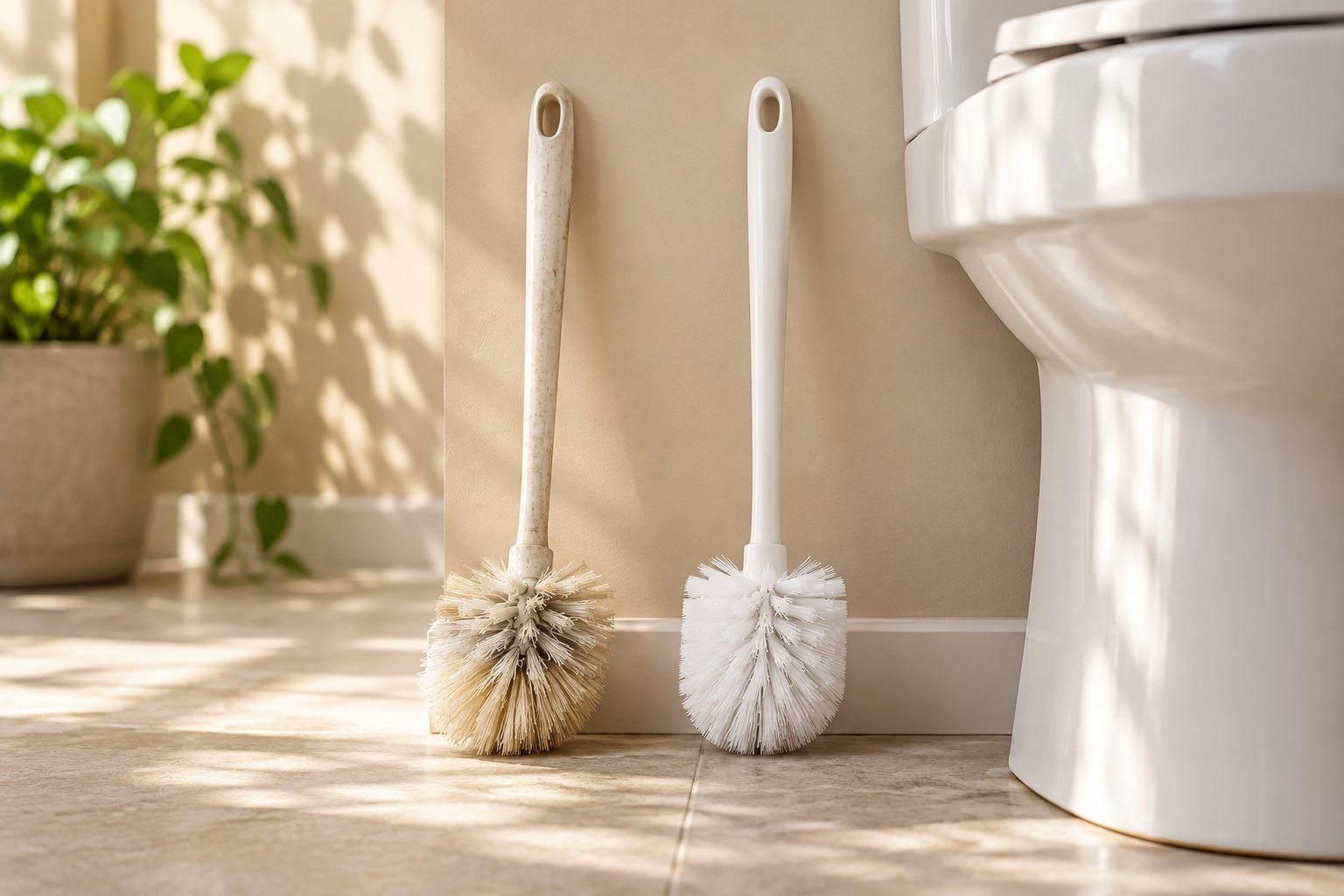
Replace a standard plastic-bristle toilet brush about every six months, and sooner if the bristles are bent, discolored, or falling out, the handle or head is cracked, or it still smells after cleaning.
That's the answer you'll find almost everywhere. What you won't usually find is the fine print: six months is a rule of thumb, not a health standard. The condition of the brush tells you more than the calendar does.
Where the six-month rule comes from
The figure is repeated widely. Hunker, for example, says to change a standard brush at least every six months and attributes that to The Hartford. None of the sources we checked cites a study behind the number.
Not everyone follows it, either. In Consumer Reports, a representative of OXO, which sells toilet brushes, says that if you clean yours regularly, you shouldn't need to replace it until the bristles discolor, bend out of shape, or fall out, or it smells even after cleaning.
We also looked for a study that swabbed household toilet brushes and didn't find one. The closest research covers other things. A 2024 paper on public restrooms, for instance, notes that flush aerosols can contaminate toilet seats, lids, floors, and nearby surfaces. That's a fair reason to keep anything stored beside a toilet clean, but it can't tell you how many months a brush lasts.
So use six months as a reminder to take a hard look at your brush, then let its condition make the call.
Five signs it's time, whatever the calendar says
- The bristles are bent, clumped, or splayed. A brush that has lost its shape won't reach under the rim properly.
- Bristles are falling out. Those loose bristles are also heading for your bowl and your pipes.
- It stays discolored after a deep clean. Some staining on a brush is normal. Staining that won't lift means it's done.
- It still smells after cleaning. If a proper clean doesn't fix the smell, nothing will.
- The handle or head is cracked. Cracks are hard to clean, and a snapped handle is a mess you don't want to have.
And if you can't remember when you bought it, that's probably your answer too.
How long a brush lasts depends on where it lives
| Situation | Usual guidance |
|---|---|
| Home, plastic bristles | About 6 months, or as soon as you see the signs above |
| Busy commercial washroom | 3–6 months |
| Lightly used washroom (café, school, restaurant) | 6–12 months |
| Silicone brush | Often sold as longer lasting, but we found no independently tested interval. Watch for the same signs. |
The commercial figures come from a UK washroom supplier. Like the six-month rule, they're trade advice rather than tested limits.
Cleaning can buy you more time
Regular cleaning is what makes it reasonable to keep a brush until it shows wear. Before you decide a stained or smelly brush is finished, give it a proper deep clean and check again. Our guide on how to clean a toilet brush has the steps, including why bleach must never meet toilet bowl cleaner.
How to throw away an old toilet brush
Seal it in a bag and put it in the household trash. Don't try to flush any part of it, and keep it out of the recycling unless your local program specifically accepts it. If the holder is stained or cracked, send it along too, so your new brush doesn't start life in the old one's water.
Or skip the replacement cycle
Fair warning: we make Toss Wand, so read this part knowing that.
A reusable brush is still the cheaper option. Say you pay $10, clean weekly, and replace it every six months. That's about 38¢ per clean, and less if it lasts longer. Toss Wand is $12.99 for 20, or 65¢ per clean.
What the difference buys is not owning a toilet brush at all. It's a single-use, 100% paper wand: wipe, toss it in the trash, and there's nothing to rinse, store, or replace. We can't point you to a study proving that's more hygienic, because we couldn't find one. We just think fewer dirty things in your bathroom is a good idea.
Reserve your pack No charge today · first run ships next springSources
- Pang-Chieh Ho, “Smarter: You're Not Cleaning Your Toilet Brush Often Enough”, Consumer Reports, 2022.
- Annie Walton Doyle, “How Often Should You Change Your Toilet Brush?”, Hunker, updated 2020.
- Commercial Washrooms Ltd, “How Often Should You Replace Your Toilet Brush?”
- Ibrahim et al., “Surveillance of Bacterial Load and Multidrug-Resistant Bacteria on Surfaces of Public Restrooms”, International Journal of Environmental Research and Public Health, 2024.